

Chief Technology Officer (CTO) Programme
Invalid liquid data
Invalid liquid data
Chief Technology Officer (CTO) Programme: shape enterprise technology strategy and innovation
Led by Cambridge Judge Business School faculty, the programme combines strategic leadership, innovation and execution with a focus on emerging technologies and responsible AI. Through core online learning, live online sessions and a three-and-a-half-day in-person immersion in Cambridge, United Kingdom, you will develop practical capabilities to evaluate emerging technology opportunities and AI applications, build future-ready technology strategies, navigate organisational, commercial and governance considerations, and make data-driven decisions while contributing strategically at the C-suite level.
77%
Only 11%
Source: IBM Institute for Business Value, Tech Leader Study
What will you learn in the CTO Programme?
Key takeaways
Strategic alignment: Align technology strategy with corporate and business objectives while assessing strategic priorities, innovation opportunities and organisational needs
CTO strategy: Develop and manage innovation portfolios, align technology initiatives with organisational priorities and strengthen strategic technology decision-making
Innovation execution: Turn innovation strategy into action through challenge identification, solution design, experimentation and implementation
AI enablement: Evaluate the opportunities and considerations associated with generative AI, agentic AI, AI-native platforms, data-driven decision-making, responsible AI and AI governance
Innovation leadership: Lead innovation across teams, functions and ecosystems while navigating organisational culture and global collaboration
Technology foresight: Evaluate emerging technologies, including AI, quantum computing, robotics, cybersecurity and spatial computing, and consider their implications for organisations
Executive influence: Strengthen your ability to communicate technology and AI investment, risk and value to senior stakeholders and boards
Learning journey
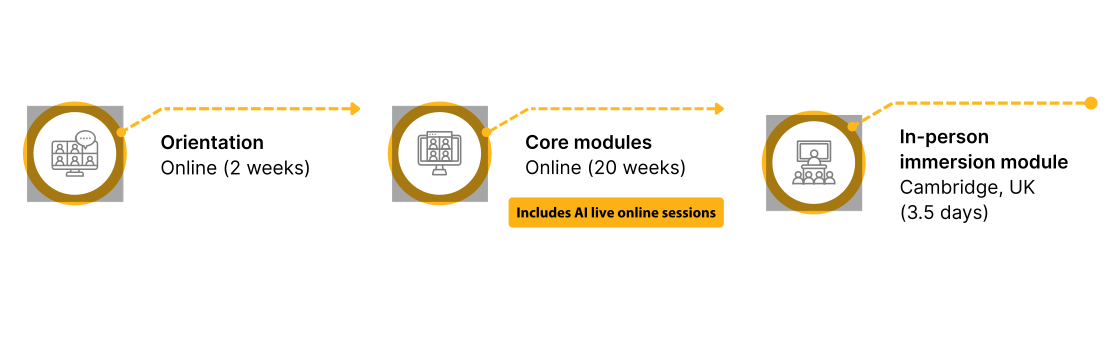
How is the Chief Technology Officer (CTO) Programme curriculum structured?
Core modules | Online
Phase 1 — Strategic Leadership for CTOs
Corporate and Business Strategy: Differentiate corporate, business and technology strategies; assess an organisation’s strategic position and apply the Markides framework to align mission, vision and strategy.
How Strategy Translates to Innovation: Explore how innovation supports strategic objectives, evaluate organisational priorities and identify the types of innovation needed along with associated challenges.
The Role of the CTO: Examine how CTOs drive strategy execution by aligning initiative objectives with functional goals and designing performance measures across roles.
The Innovation Portfolio: Learn to manage an innovation portfolio by translating strategic objectives and organisational capabilities into portfolio decisions and designing tailored selection processes.
Phase 2 — Leadership, Culture and Innovation: Understanding People to Drive Change
What Is Culture?: Examine the defining features of organisational culture, its origins and its alignment with strategic needs.
Changing Culture: Learn approaches for identifying where cultural change is necessary, implementing change and making culture fit for purpose.
Leadership Is Emotional: Explore the role of social emotions in decision-making and relationships, understand strengths and weaknesses and develop communication strategies.
Innovation Leadership: Analyse innovation leadership practices, methods for understanding team motivation and approaches for implementing fair processes.
Leadership Is Cultural: Investigate cultural influences, including imitation, and develop strategic plans for influencing organisational culture.
Innovation and Sustainability: Learn how sustainability and technology initiatives align with strategy, and examine the CTO’s role in enabling sustainable innovation.
Phase 3 — Innovation Architecture and Execution
Innovation Types and Processes: Explore experimentation challenges, approaches suited to diverse innovation types and methods for managing innovation.
Structure of Organisations: Examine how organisational structures influence strategy and behaviour, and identify opportunities for automation.
Strategic Role of Projects: Evaluate and select innovation projects, align operational plans with strategic objectives and prepare for digital transformation.
The Distributed Nature of Innovation: Analyse how collaborations and interdependencies shape innovation and identify both realised and unrealised opportunities.
Operation Measures and Incentives: Understand how process measures and incentives influence behaviour, and assess the alignment of operational metrics with innovation objectives.
Phase 4 — Global Ecosystems and Strategic Partnerships
Gaining an Ecosystem Edge: Explore how to create value within ecosystems, develop strategies to launch and scale them, promote innovation and identify monetisation opportunities.
From Local to Global Innovation: Examine readiness for global innovation, leverage global knowledge and develop approaches to expand beyond geographic boundaries.
Contracting with Partners: Explore partnership models, contracting structures, risk allocation and stakeholder tensions when engaging with external partners.
Global Cross-Boundary Collaboration: Learn to navigate challenges across globally dispersed teams, leverage technology and plan for effective boundary-spanning communication.
Frugal Innovation: Explore principles for solving problems with limited resources and delivering value through simplicity without compromising quality.
Phase 5 — Enacting Innovation
Challenge Identification: Identify meaningful innovation challenges, investigate them systematically and define them clearly.
Ideation and Solution Design: Guide the creation of challenge statements, generate and select innovative ideas and develop them into viable solutions.
Proposition and User Experience: Craft elevator pitches, visualise customer journeys, define functionality, build cost models and articulate commercial propositions.
Agile Experimentation and Implementation: Explore rapid testing and agile experimentation techniques to refine and implement solutions effectively.
Live online sessions (6 sessions)
Gain insights into best practices for implementing technology initiatives through faculty-led live sessions. Recordings will be available for flexible viewing.
Strategy: The Innovation Portfolio
Learn to build and manage an innovation portfolio that aligns initiatives with strategic goals, balances risk, reduces bias and drives organisational alignment.
Process and Execution: Innovation Types and Processes
Explore structured and iterative innovation processes, balancing risk and flexibility while integrating incremental and radical initiatives.
Thinking Globally: The Distributed Nature of Innovation
Discover how to foster networked innovation through cultural alignment, stakeholder engagement and governance while leveraging emerging technologies.
Incorporating Data and AI into Project Prioritisation Decisions
Learn to manage innovation portfolios and partnerships using data-driven decision-making, effective governance and dynamic data strategies.
From Silos to Synergy: Cross-Boundary Collaboration for AI Transformation
Develop strategies to overcome the challenges of cross-boundary collaboration, including cultural differences and remote working constraints.
Thinking Globally: Frugal Innovation
Explore how to innovate effectively with limited resources through flexibility, collaboration and customer engagement.
In-person immersion module in Cambridge (three and a half days)
Complete the programme and meet your cohort peers and faculty in Cambridge during a three-and-a-half-day in-person immersion module, creating a lifelong community of global executives.*
*Participants must attend the in-person immersion module in Cambridge to complete the programme and receive the certificate of completion.
Note: the session topics are tentative and subject to change.
AI-focused live online sessions
The AI-focused live online sessions explore the strategic, operational and leadership implications of AI, helping you understand how to apply AI responsibly, navigate emerging technologies and support better business outcomes across your organisation.
Session 1 — From Orchestration to Autonomy: Leveraging Agentic AI for Innovation
Analyse the shift from AI orchestration to fully agentic systems capable of autonomous reasoning, planning and execution. Examine how organisations can harness agentic AI to drive innovation, redesign workflows and unlock new value while addressing the technical, operational and governance considerations that come with increased autonomy.
Session 2 — Our AI Future
This interactive session explores the transformative possibilities of AI in the coming years, examining how advances in intelligence, autonomy and reasoning could reshape business and society.
Session 3 — Copyright and Creativity with Gen AI
Examine the evolving intersection of copyright law and creative practice in the age of gen AI. Through real-world examples and emerging legal guidance, explore questions of ownership, authorship and fair use while highlighting how creators and organisations can responsibly harness gen AI tools.
Session 4 — Measuring AI Portfolios as Strategic Assets
Explore the key principles to manage the AI value chain and deliver value to the organisation, customers, society and employees.
Session 5 — Designing Leadership in the Age of AI
As AI capabilities double every four months, leaders face a defining question: what should we automate, where should we augment and what must remain distinctly human? Drawing on the latest research, this session introduces a practical framework for AI delegation, showing how thoughtful integration of generative AI can boost decision quality, reduce leadership fatigue by up to 50% and protect the uniquely human capabilities that drive trust, judgement and organisational performance. You will leave with a clear operating model for redesigning work so that AI expands leadership impact.
Session 6 — Managing the AI-enabled workplace
In a world where employees and managers increasingly rely on data and AI to perform and coordinate work, leadership itself is being reshaped. As AI becomes embedded in everyday workflows, managers must evaluate AI-assisted work, maintain accountability when algorithms inform decisions and balance data-driven insights with human expertise and professional judgement. At the same time, the growing use of algorithmic management raises important questions about fairness, transparency, privacy and employee trust.
Note: Session topics are indicative and are subject to change.

In-person immersion module
The in-person immersion is designed as the high-impact executive component of the program, bringing together senior technology leaders for an intensive experience focused on technology strategy, innovation, AI-Native leadership, and enterprise transformation. The immersion enables participants to apply concepts through faculty-led cases, simulations, executive discussions, and peer learning. You will:
Technology Strategy: Explore technology strategy, investment priorities, competitive advantage, the evolving role of the CTO
AI Enablement: Examine emerging technologies, generative AI, agentic AI and AI-native platforms, and their implications for enterprise innovation, transformation, governance, cybersecurity and responsible adoption
Innovation Execution: Apply innovation strategy through challenge identification, solution design, innovation challenges, experimentation and implementation
Technology Leadership: Develop capabilities in boardroom influence, leading transformation, building high-performing teams and managing strategic technology ecosystems
Strategic Alignment: Align technology and innovation initiatives with corporate, business and organisational priorities, including talent and technology operating models
Cambridge Ecosystem: Engage with Cambridge faculty, practitioners and the broader technology and innovation ecosystem through discussions and peer networking
Experiential Learning: Apply concepts through faculty-led cases, practical labs, simulations, executive discussions, guided group activities and peer learning
Who is the Chief Technology Officer (CTO) Programme for?
Current CTOs | Looking to lead AI-enabled transformation and shape the technology agenda across their organisations |
Senior engineering and platform leaders | Seeking to connect technology delivery with business strategy and drive adoption at scale |
AI, cybersecurity, risk and compliance leaders | Focused on shaping responsible technology strategies and navigating the governance challenges of emerging technologies |
Technology and transformation leaders | Seeking to turn innovation into measurable business impact and take a broader leadership role across the organisation |
Eligibility criteria
Accomplished work experience in functional, technical or business roles
More than ten years of work experience with a successful track record in one or more functional areas of business
An agenda for change and adoption of emerging technologies
Past participant profile
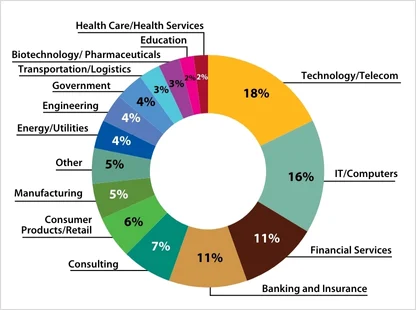
Diverse industries
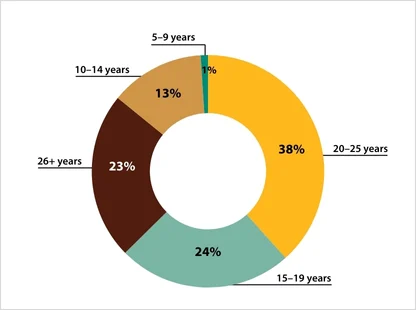
A wide range of work experience
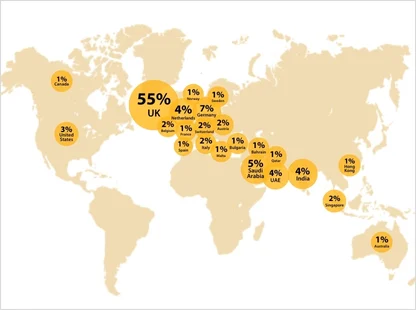
Global cohort
How does the Chief Technology Officer (CTO) Programme use applied learning?
The Chief Technology Officer (CTO) Programme integrates practical learning through live faculty sessions, practitioner insights, peer collaboration, a three-and-a-half-day immersion in Cambridge, and a capstone project focused on a real-world technology challenge within your organisation. These experiences enable you to apply programme concepts to strategic, commercial and organisational decisions throughout the learning journey.
AI strategy for technology leaders

Agentic AI and autonomous systems
Understand how AI is evolving from orchestration to autonomous systems capable of reasoning, planning and execution. The session also explores the operational and governance considerations that accompany increasing AI autonomy.

Generative AI and future trends
Explore how advances in generative AI and emerging AI capabilities could influence organisations, leadership priorities and broader societal change.

AI-enabled workplaces and transformation
Examine how technology leaders are responding to innovation challenges through agile experimentation, strategic partnerships and insights gained from capstone work.

AI and data-driven decision-making
Learn how AI, big data and analytics can support organisational decision-making, strengthen business performance and inform technology strategy.

Responsible AI and governance
Explore the principles of responsible AI adoption by examining topics such as copyright, authorship, fairness, transparency and accountability in AI-enabled environments.
Programme highlights

Live online sessions
Engage with faculty-led sessions exploring innovation, AI, emerging technologies and strategic decision-making.

Cambridge ecosystem
Tap into Cambridge Judge Business School’s intellectual capital through immersive engagements with world-class faculty and thought leaders

Success coach
Craft your learning journey in line with your career goals with a success coach assigned to your cohort.

Practitioner insights
Glean insights from global industry experts with guest lectures throughout the programme.

In-person immersion module
Experience a three-and-a-half-day immersive learning experience in Cambridge, with faculty-led sessions, practical exercises and peer collaboration.

Capstone project
Apply programme concepts to prepare a capstone assignment that addresses a real-world technology issue in your organisation.

Programme completion benefits
Earn select Cambridge Judge Business School benefits upon completion of the programme.
Why choose the Chief Technology Officer (CTO) Programme?
Cambridge Chief Technology Officer (CTO) Programme vs other CTO programmes | Chief Technology Officer Programme — CJBS Executive Education | Other Chief Technology Officer Programmes |
Institution brand | Cambridge Judge Business School sits within a global hub for technology, AI and innovation, empowering leaders shaping the future of business.
| Programmes are from strong university brands but geared more towards emerging CTOs and less immersive in format. |
Immediate business impact | Apply programme frameworks and insights to a real-world technology, innovation or AI-related challenge through the capstone project. | Outcomes are often more conceptual or longer-term with less immediate workplace application. |
Technology and innovation depth | Explore strategic leadership, innovation, AI and emerging technologies, including agentic AI, quantum computing, robotics and spatial computing. | Many programmes focus broadly on leadership or transformation, without deeply addressing the processes of driving innovation that shape CTO-level decision-making. |
Breadth of leadership exposure | Develop capabilities across strategic leadership, innovation, cross-boundary collaboration, responsible AI, governance and executive decision-making. | Programmes focus primarily on tech-enabled business strategy and transformation themes, with less emphasis on leadership breadth, innovation culture and cross-boundary collaboration. |
Faculty and peer learning | Learn through faculty-led sessions, practitioner insights, peer collaboration and a three-and-a-half-day immersion module in Cambridge. | Faculty exposure and peer diversity vary significantly across programmes. |
Cross-industry perspective | Exchange perspectives with global peers and industry experts while applying learning to a real-world organisational challenge. | Peer interaction and cross-industry exposure can be less central to the learning experience. |
Best fit for | Designed for current CTOs and senior technology leaders seeking to expand their strategic influence and lead enterprise-wide innovation and transformation. | Programmes are ideal for executives seeking to drive digital transformation through technology strategy, emerging trends and execution frameworks. |
Meet the faculty for the Chief Technology Officer (CTO) Programme

Jeremy Hutchison-Krupat
Associate Professor in Innovation and Operations Management
Professor Jeremy Hutchison-Krupat’s research interests include how organisations can effectively implement their innovation objectives, particularly the impact of an organisat...

Nektarios (Aris) Oraiopoulos
Professor of Operations and Technology Management

Khaled Soufani
Management Practice Professor of Financial Economics and Policy

Jaideep Prabhu
Professor of Marketing

Kristin Behfar
Contributing Faculty, Professor of Strategic Leadership and Ethics at the United States Army War College (Retired)

Jane Davies
Faculty (Professor Level) in Management Practice

Matthew Lawson
Coach and Mentor, MSt Entrepreneurship

Stylianos Kavadias
Margaret Thatcher Professor of Enterprise Studies in Innovation & Growth

Jennifer Howard-Grenville
Diageo Professor in Organisation Studies

Stella Pachidi
Research Fellow (Organisational Theory and Information Systems)

Peter Williamson
Contributing Faculty, Honorary Professor of International Management, and Fellow and Director of Studies in Management at Jesus College
What do past participants say about the Chief Technology Officer (CTO) Programme?
Credentials and outcomes: Chief Technology Officer (CTO) Programme
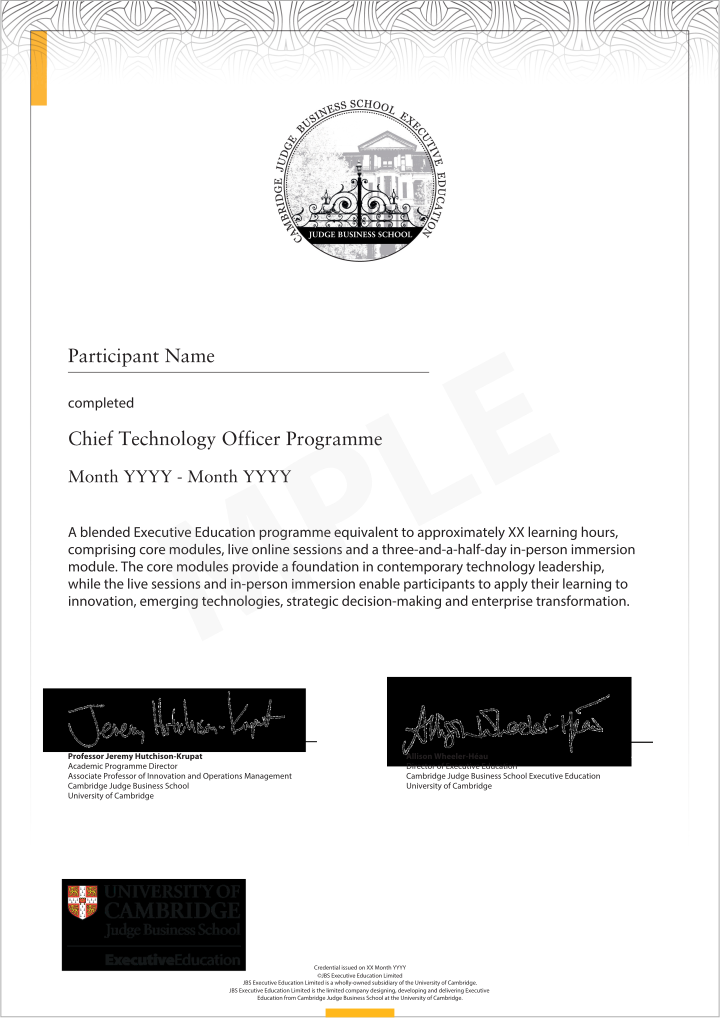
Certificate
Upon successful completion of the programme, participants will be awarded a certificate of completion in Cambridge by Cambridge Judge Business School Executive Education.
Programme completion benefits
Earn select Cambridge Judge Business School benefits upon completion of the programme, including:
Access to Cambridge Judge Business School Executive Education’s Leader’s Club network
Regular newsletter with updates on the latest research, activities and events at the school
Discount on future CJBS Executive Education open-enrolment programmes
Invitations to worldwide networking events including in-person events and webinars
FAQs
Programme
What is the Chief Technology Officer Programme from Cambridge Judge Business School Executive Education?
The Chief Technology Officer (CTO) Programme is a CTO leadership programme designed for experienced CTOs and senior technology executives seeking to move beyond infrastructure management and lead enterprise-wide innovation and transformation. The programme develops strategic technology leadership capabilities across innovation, emerging technologies, AI and data driven decisions.
Who is the CTO Programme from Cambridge Judge Business School Executive Education ideal for?
The programme is designed for experienced CTOs, C-suite executives and senior technology leaders who want to strengthen their strategic leadership capabilities and contribute at the C-suite level. It provides chief technology officer executive education for senior leaders focused on technology strategy, innovation, emerging technologies and enterprise transformation.
What will I learn in the Chief Technology Officer (CTO) Programme from Cambridge Judge Business School Executive Education?
You will explore strategic leadership, innovation architecture and execution, innovation processes, organisational culture, emerging technologies and AI. The curriculum also covers strategic partnerships, global collaboration, applying AI, data driven decisions and the practical application of innovation frameworks to technology and business challenges.
Does the Chief Technology Officer (CTO) Programme include AI as a topic?
Yes. AI is integrated throughout the programme, with live online sessions covering topics including agentic AI, generative AI, AI portfolios, AI-enabled workplaces, responsible AI and AI delegation. The Cambridge immersion also includes an Executive AI Lab focused on agentic AI workflows, autonomous enterprise processes, AI governance and responsible AI. This provides an executive AI leadership programme from a CTO perspective on the strategic and organisational implications of AI adoption.
How does the Chief Technology Officer Programme stay current with evolving technology trends?
This executive AI leadership programme for CTOs explores emerging technologies through its core curriculum, live online sessions and Cambridge immersion. Topics include agentic AI, quantum computing, robotics, spatial computing, AI-native technology platforms and technology foresight, alongside the strategic, commercial and governance considerations involved in adopting emerging capabilities and driving innovation.
Learning journey
How long will it take to complete this programme?
The Chief Technology Officer (CTO) Programme comprises online modules, live online sessions and an in-person capstone module in Cambridge. The entire learning journey can typically be completed in about 7 to 8 months, depending on the dates of the in-person module.
How is the Chief Technology Officer (CTO) Programme structured?
The programme is structured across five learning phases, live online sessions and a three-and-a-half-day in-person capstone module in Cambridge.
What learning formats are included in the programme?
You will learn through self-paced online modules, live online sessions, project coaching and an in-person capstone module in Cambridge.
What is the in-person capstone module?
The in-person capstone module is a three-and-a-half-day learning experience in Cambridge in which you will engage with faculty and peers, participate in collaborative learning activities and present your capstone project.
Does the programme include networking opportunities?
Yes. Throughout the programme, you will learn alongside a global cohort of senior technology professionals and engage with faculty, industry experts and peers through live online sessions and the in-person capstone module.
Are there any prerequisites for joining the Chief Technology Officer Programme?
This programme is designed for participants with over ten years of professional experience, a proven track record in one or more business functions and a strong agenda for driving change. Fluency in written and spoken English is required, along with a desire to strengthen your technology leadership skills. Exposure to global work projects is preferred.
Certificate
What will I receive after completing the programme?
Upon successful completion of the programme, participants will be awarded a certificate of completion in Cambridge by Cambridge Judge Business School Executive Education.
Payment process
Who will be collecting the payment for the programme?
Emeritus collects all programme payments, provides learner enrolment and programme support and manages learning platform services.
Is there any discount or financial aid?
You can pay the full programme fee upfront or pay in easy instalments. If you apply well in advance of the programme start date, you can receive a programme fee benefit. If you believe you may qualify for other discounts, please check with your programme adviser to confirm the applicable discount that will provide the greatest benefit and whether there are specific terms and conditions for use. If you would like to approach your organisation with a sponsorship request for this programme, here is a customisable template that you can use.
Are there any restrictions on the types of funding that can be used to pay for the programme?
Programme fees for Emeritus programmes with Cambridge Judge Business School Executive Education may not be paid for with (a) funds from the GI Bill, the Post-9/11 Educational Assistance Act of 2008 or similar types of military education funding benefits or (b) Title IV financial aid funds.
Refund
What is the programme refund and deferral policy?
For the programme refund and deferral policy, please click the link here.
Accessibility
How does Emeritus support accessibility for learners?
Emeritus is committed to making high-quality education accessible and affordable to individuals, companies and governments around the world. If you have questions about accessibility or would like to discuss available support options before enrolling, please contact accessibility@emeritus.org. For more information about our accessibility practices, please review our Accessibility Policy here.
Connect with a programme adviser for a 1:1 session
Our programme advisers have helped senior executives around the world choose the right programme for their career goals. Schedule a 1:1 to get a deeper understanding on why the Chief Technology Officer Programme is the right fit for you.
Email: cambridge_cto@emeritus.org
Phone: +971 80 0088601097 (UAE) / +44 1786 649936 (UK) / +1 573 527 3654 (USA) / +52 55970 73870 (LATAM) / 000 8009191970 (India*) / +65 3138 1820 (SG)
*If you are dialing the India number, please make sure to include the first three zeros (000).
Early applications are encouraged. Admissions are reviewed on a first-come, first-served basis.
Flexible payment options available.
Starts On